Losing altitude
26 August, 2026
Market Insight:
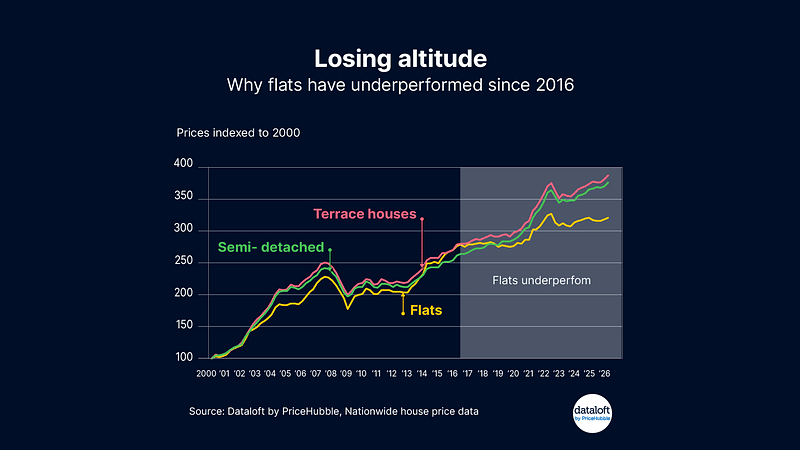
- There has been a clear shift in price growth by property type since 2016: flats have been underperforming.
- No single factor explains this, but the timing offers insights. The first shift coincided with the introduction of the stamp-duty surcharge on second homes, which hit buy-to-let purchases particularly hard.
- Since 2016 further increases in stamp duty affecting buy-to-let alongside additional other legislative changes has prompted more landlords to leave the sector. Around this time, it was also the beginning of the cladding crisis and left owners of taller buildings needing fire-safety certificates before they could sell.
- A second later shift followed the pandemic, as buyers embarked on a 'race for space' and an increased desire for outside space. Rising service charges for flats and leasehold problems have compounded the effect.
- These collective issues have not touched every flat, but enough to shift performance of the national average. A decade on, the divergence is stark: flat prices have gained just 16%, against 39% for terraces and 44% for semis.
- This is helping flats become more affordable and opportunities are there - as long as buyers do their research and are clear on the elements that could affect performance. Source: Dataloft by PriceHubble, Nationwide House Price data